Buried silver dollars
We Have Always Lived in the CastleThe Buried silver dollars are both a literal cache and part of Mary Katherine Blackwood’s private system of protection. Hidden by the creek, the box belongs to a landscape she has filled with buried objects and imagined power. When Charles Blackwood uncovers it, he treats the coins not as a child’s safeguard but as money to be claimed and secured. The discovery makes visible a deeper conflict over who may define the Blackwood property, its contents, and the meaning of safety.
Identity and Place in Mary Katherine’s Rituals
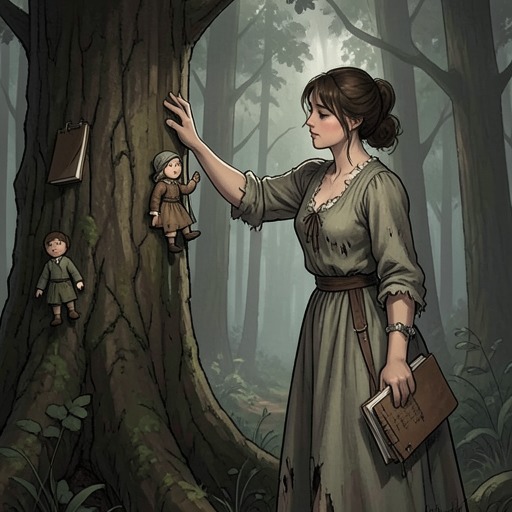
Mary Katherine checks the box on Sunday mornings, alongside a doll buried in the long field and her father’s notebook nailed to a tree in the pine woods. She believes that as long as these safeguards remain where she put them, nothing can get in to harm the family. The coins are therefore not simply hidden savings: their placement is part of a protective arrangement spread across the estate, each buried or fixed object anchoring her confidence in the land’s defenses.
The box also belongs to a habit that began in childhood. Mary Katherine recalls quartering the long field and burying something in each part so the grass would grow higher as she grew, giving her a place to hide. She buried six blue marbles in the creek bed in hopes of making the river beyond run dry, and buried her baby teeth with the possibility that they might someday grow into dragons. Constance Blackwood encouraged the practice by giving her small things to bury, including a penny or a bright ribbon. The silver dollars are thus one substantial element in a much older accumulation: marbles, teeth, colored stones, and other treasures imagined as a tightly joined protective web under the ground.
The cache is specific in location, but Mary Katherine’s attachment to it extends across the surrounding landscape. On a walk with Jonas, she finds the rock covering the doll undisturbed, then passes through the orchard toward the creek and confirms that the box of silver dollars is safe. Nearby, she has made a hiding place from which she can watch no one and imagine that nothing will change. The creekside cache sits within this intimate geography of concealment, where buried property and hidden refuge reinforce one another.
Discovery and Dispute
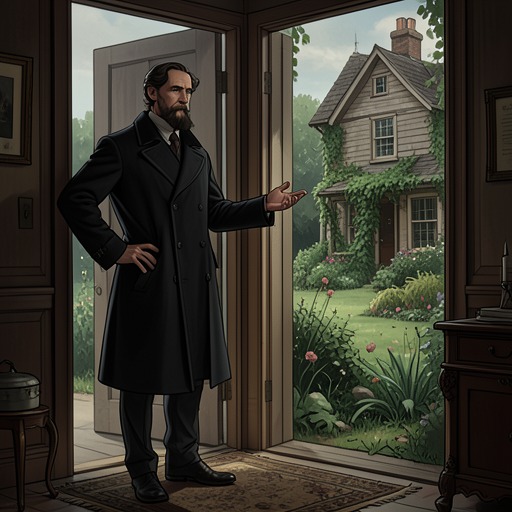
Charles finds the box and brings it out as evidence of what he regards as Mary Katherine’s unreasonable behavior. He insists that it is money, not something that belongs to her, and declares that there must be twenty or thirty dollars in it. Constance remembers the coins and says that Mary Katherine buried them; she explains that Mary Katherine likes burying things. Her response recognizes the box’s history without adopting Charles’s alarm.
Charles’s concern quickly grows beyond the contents of this one cache. Holding the box, he asks how anyone can know that Mary Katherine has not buried thousands of dollars across the property. The possibility that money might lie hidden throughout the land seems to him outrageous, while Constance says that no harm has been done. Their exchange exposes competing ways of seeing the same object: to Charles it is accessible wealth and a question of control; to Constance it is a familiar expression of her sister’s habits.
Mary Katherine wonders how Charles found the box, speculating that he may be digging systematically or that Charles and money somehow find one another. She sees him heading toward the study, apparently to put the coins in the Blackwood family safe, and runs quietly downstairs and out through the kitchen. The episode does not state that she recovers the box. Instead, its immediate consequence is to show Charles extending his authority over the house’s contents and Mary Katherine trying to evade that appropriation.
Property, Protection, and Exposure
The dispute gives the coins a sharper meaning because the Blackwoods have been raised not to ask others for anything. When Mary Katherine jokes about asking the Carringtons for a horse, Constance tells her that they do not ask anyone for help. The buried dollars embody an opposite practice: a resource kept within the family’s own land, outside public exchange and beyond the reach of requests or obligations. Charles’s discovery breaks that privacy by converting a concealed object into a matter of household accounting and possession.
Other episodes make clear that objects in the house can carry histories that are not apparent from their material value. After the poisoning, Constance washes the family’s heavy silver sugar bowl before the doctor or police arrive, and later explains the washing as a response to a spider. During the village’s destruction of the house, inherited silverware, family textiles, dishes, and food are scattered or broken, while the sugar bowl lies damaged on the kitchen floor. These are not the buried dollars, but the scenes echo the same tension: domestic objects can be treasured, used as evidence, concealed, or exposed to hostile interpretation. The coins’ monetary label is especially consequential because it strips away the protective story Mary Katherine has attached to their burial.
Loss of Access and Lasting Significance
After the house burns and the sisters return to its ruin, their movements contract. Mary Katherine is no longer allowed to go to the creek because Julian Blackwood is there and the creek is too far from Constance. She is also forbidden to bury anything more or to touch stone. The cache’s original location remains part of her remembered network of safeguards, but the routines that let her visit and maintain it have been curtailed. The change is not described as the coins being recovered or destroyed; what changes is Mary Katherine’s access to the place and her ability to continue the practice.
The object’s trajectory therefore moves from deliberate concealment, through exposure and threatened seizure, to a landscape she can no longer freely reach. Charles’s handling of the box reveals how readily he translates a private ritual into financial property, while Constance’s recognition of the buried coins preserves their personal history. In the larger pattern of Mary Katherine’s life, the dollars are at once tangible wealth and an imagined defense: their power depends less on spending them than on keeping them hidden, in place, and bound to the ground she considers home.